
July 16, 2026
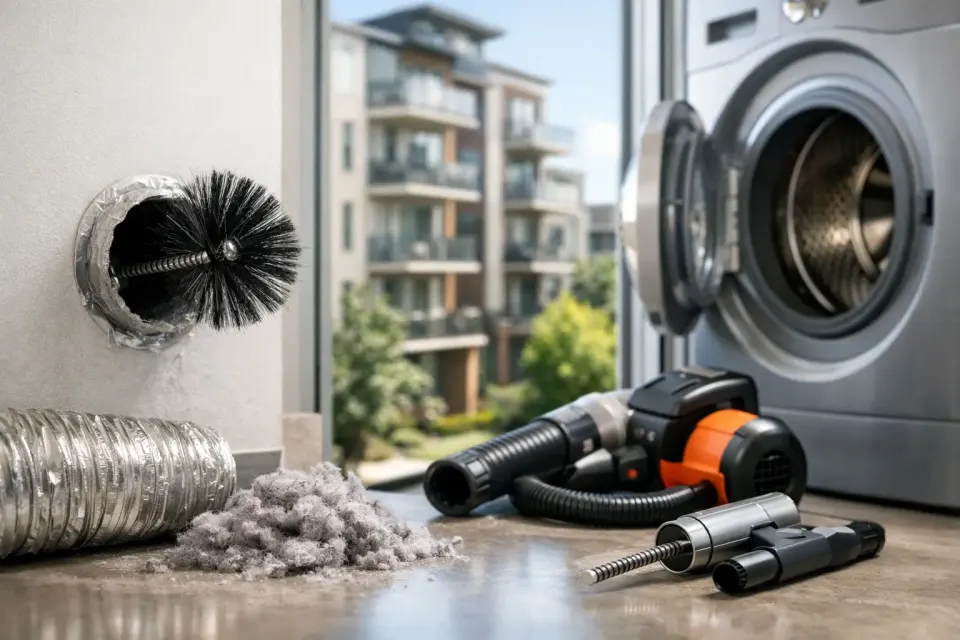
A dryer that suddenly takes two or three cycles to finish a load is more than a daily annoyance in a condo. It is often the first visible sign that lint is building up where you cannot see it. Dryer vent cleaning for condos matters because these systems are usually longer, harder to access, and more dependent on shared building rules than the vent setup in a single-family home.
That combination changes the job. In a condo, the vent may run behind walls, through ceilings, or into a shared exterior termination point. You may own the dryer, but the duct route itself can fall into a gray area between unit responsibility and building responsibility. That is why condo owners and property managers need more than a generic reminder to clean the vent. They need a clear sense of what is normal, what is risky, and when to bring in a professional.
Why dryer vent cleaning for condos is different
In a house, the dryer vent is often short and direct. In a condo, it may travel a much longer path before exhausting outside. The longer the vent line, the more chances lint has to settle, especially at turns and connection points. Add in years of use, limited access, and occasional improper installations, and a simple maintenance task can become a genuine safety issue.
Condo buildings also introduce another layer: rules. Some associations handle exterior vent components. Some expect unit owners to manage everything from the dryer connection to the exit point. Others split the responsibility. If no one is sure where that line is, maintenance gets delayed, and that is when problems build up.
The stakes are not only about convenience. Restricted dryer vents can trap heat, reduce airflow, wear out the appliance faster, and increase fire risk. In a multi-unit building, that risk affects more than one household.
The warning signs are usually easy to spot
Most condo owners do not see the vent interior, but they do notice the symptoms. Clothes taking longer to dry is the most common one. If loads that used to dry in one cycle now need two, airflow is probably being restricted.
Heat and humidity are another clue. If the laundry area feels unusually warm or damp during a cycle, the vent may not be exhausting properly. A burning smell, even a faint one, should never be ignored. Neither should a dryer that feels hotter than usual on the outside.
Sometimes the signs show up at the building exterior. The outside flap may barely open during operation, or lint may be visible around the vent hood. In condos, that exterior point is not always easy for the unit owner to check, which is one reason professional inspection is often the safer route.
What makes condo vent systems harder to maintain
Length is one issue, but it is not the only one. Condo vents often have more elbows and more concealed sections. Every bend slows airflow and creates another place for lint to collect. If the vent was installed with poor materials or has become disconnected somewhere behind the wall, cleaning becomes more than a routine brush-out.
There is also the question of access. In many buildings, the full vent route cannot be reached from inside the unit alone. A proper service may require checking both the dryer connection and the exterior termination. In some cases, roof access, common-area access, or coordination with building staff is part of the job.
That is where experience matters. A technician who regularly works on condo systems knows how to inspect the setup, identify trouble spots, and clean the line without guessing. For owners and managers, that reduces both risk and back-and-forth.
Who is responsible in a condo?
This is where things get tricky. In some associations, the unit owner is responsible for the entire vent serving that unit. In others, the owner handles the flexible transition line and the dryer itself, while the building handles the in-wall or shared portions. Some bylaws are clear. Others are vague until a problem happens.
If you own a condo, check your governing documents before scheduling work. If you manage a building, do not assume every resident understands the maintenance boundary. Clear expectations prevent disputes and help avoid long stretches where no one services the system.
Even when responsibility is shared, the practical approach is simple: if drying times are increasing or airflow seems weak, do not wait for a paperwork debate to solve itself. Get the system evaluated, then sort out the maintenance responsibility from a position of facts rather than guesswork.
What a professional condo vent cleaning should include
A proper service is not just sticking a brush into the vent opening for a few minutes. In a condo, the technician should inspect the dryer connection, check the vent path as far as accessible, remove lint buildup with the right equipment, and verify that airflow improves after cleaning.
The best providers also look for issues that cleaning alone will not fix. A crushed transition hose, disconnected duct, blocked exterior cap, or outdated vent material can keep causing problems even after lint is removed. That is why visible results matter. You want to know what was cleaned, what was found, and whether the system is now venting as it should.
For property managers, this is especially important. A quick service that leaves the underlying restriction in place is not real maintenance. It just delays the next complaint.
How often should condos have dryer vents cleaned?
There is no one-size-fits-all answer, because usage matters. A single resident who does a few small loads a week may go longer between cleanings than a family with frequent laundry. Building design matters too. A short, straight vent line behaves very differently from a long run with multiple turns.
For many condos, annual service is a practical baseline. If the unit has heavy dryer use, pets, long vent runs, or a history of slow drying, more frequent inspection may make sense. For landlords and property managers, turnover is also a smart checkpoint. When one resident moves out and another moves in, it is a good time to confirm the vent is clean and functioning properly.
This is one of those areas where waiting for a problem is usually the more expensive plan. Higher utility use, dryer wear, emergency service calls, and potential building complaints all cost more than routine maintenance.
Why DIY is not always the smart move
Homeowners can and should clean the lint screen every load and keep the area around the dryer free of dust. That basic upkeep helps. But full dryer vent cleaning in condos is often not a simple DIY project.
The main issue is reach. Consumer kits may clear some lint near the dryer, but they often do not address deeper buildup in long concealed runs. They can also damage fragile or poorly connected duct sections if used aggressively. And if the vent problem is actually a crushed line or a blocked exterior hood, brushing from one end may not solve much.
In condo buildings, DIY work can also create access and liability problems. If exterior components or shared sections are involved, unapproved work may violate building rules or leave a bigger issue undiscovered.
A good service call should feel straightforward
Condo owners and managers usually do not want a long technical lecture. They want to know whether the vent is clogged, whether it is now clean, and whether anything needs repair. Fair enough.
A dependable service company should be able to inspect the system, explain the condition in plain English, and give clear next steps. If extra work is needed, that should be obvious and documented, not hidden behind vague language. Straightforward pricing, fast scheduling, and respect for the home matter just as much as the cleaning itself.
That is especially true in busy condo buildings where timing, building access, and resident coordination can complicate an otherwise simple appointment. A company used to working in condos can usually move faster and cleaner, with less disruption.
For condo buildings, this is a safety issue first
It is easy to frame vent cleaning as a way to improve dryer performance, and it does do that. Clothes dry faster, airflow improves, and the appliance does not have to work as hard. But in condos, the more important point is safety.
Lint is highly flammable. When heat, restricted airflow, and accumulated debris combine inside a hidden vent line, you have a problem worth taking seriously. In a detached house, that is serious enough. In a multi-unit building, where walls, ceilings, and neighboring homes are part of the equation, it deserves prompt attention.
If you are noticing longer dry times, excess heat, or a musty laundry area, treat that as a maintenance issue that should move up the list. And if you manage condos in New York City or New Jersey, where many buildings have older layouts and hidden duct runs, staying ahead of vent buildup is one of the simplest ways to reduce avoidable risk.
A clean dryer vent is not glamorous, but it is one of those small services that protects your appliance, your time, and the people living around you.